When Everything Goes Down at Once: Lessons From November's Outage Week
Between November 13 and November 19, 2026, the United States had a week that felt coordinated. The FAA issued a nationwide ground stop. A Microsoft outage disrupted email and collaboration tools. Customers had trouble reaching accounts at Chase and Wells Fargo. Apple services, Workday and other platforms reported problems. Reports of network trouble at the NSA added to the sense that something larger was going on.
Dark Rock's Alexander Bates, CEO and Founder, and Matt Malone, Director of Cybersecurity Services, spent the week answering one question on national and local broadcasts: is this an attack? Their answer, and ours, is that headlines are not evidence. But the week does not need to be an attack to be a warning.
Availability Is a Security Outcome
Security is often described as a triad: confidentiality, integrity and availability. Most public attention goes to the first, because breaches make news. This week was about the third.
When a system goes down, the people who depend on it feel the same impact whether the cause was an adversary or a failed change. Travelers were stranded either way. Customers could not reach their money either way. That is why availability belongs in the security program, with the same rigor as data protection: resilience testing, change control and incident response.
Root Cause Before Speculation
In the first hours of an outage, the people closest to it often do not know the cause. Incident response moves through discovery, containment and eradication, and organizations stay quiet while teams work. Silence is not proof of a cover-up, and noise is not proof of an attack.
Organizations should still expect to explain. When a critical service fails, customers, regulators and the public deserve a credible account of what happened. For failures that affect national infrastructure, independent validation of the findings is worth the effort. It is the fastest way to replace speculation with facts.
Single Points of Failure Are Everywhere
The pattern across the week was concentration. Large parts of the economy depend on a small number of cloud platforms, identity providers and service vendors. When one of them pushes a bad update or loses a component, every customer goes down together.
One detail from the Microsoft outage deserves attention. As Matt Malone pointed out on air, the disruption reached not only email and collaboration tools but also security tooling, including Microsoft Defender services. When the platform that runs your business is also the platform that watches for attacks, an outage can blind you at the moment you most need visibility.
Questions every organization should ask:
- If our primary collaboration platform fails, how do we communicate?
- Do our security monitoring and our productivity tools share a single point of failure?
- Which vendors, if they went down for a day, would stop our business?
- Have we tested working through any of those failures?
Infrastructure Age Is a Risk Decision
Public commentary on the FAA ground stop focused on how old some of the underlying equipment is. Aging systems are not a failure on their own; many run reliably for decades. They become a risk when modernization is deferred indefinitely, when maintenance is driven by the lowest bid, and when changes are made during peak hours rather than planned windows. Every organization carries some of this debt. The point is to know where it is and decide deliberately.
Adversaries Were Watching
Even if nothing malicious happened this week, adversaries learned from it. Public outages reveal which systems are fragile and how long recovery takes. That matters more now that attackers are using AI to move faster: the FBI warned this month about intrusions using AI tooling to automate parts of an attack.
Exercise the Bad Day Before It Arrives
The organizations that handled this week best had practiced. A tabletop exercise built around your real dependencies, including the failure of a major vendor, shows who has authority, how teams communicate when normal channels are down, and what customers will be told.
Where Dark Rock Fits
Dark Rock helps organizations map concentration risk, design resilience into their security programs, and run tabletop exercises with tracked actions through our ATLAS platform. Watch our leaders' coverage from the week in the newsroom, and book a consultation if this week raised questions about your own single points of failure.
Dark Rock Advisory Team
Dark Rock Cybersecurity — cybersecurity and compliance practitioners helping organizations build resilient, audit-ready security programs.
Related Articles
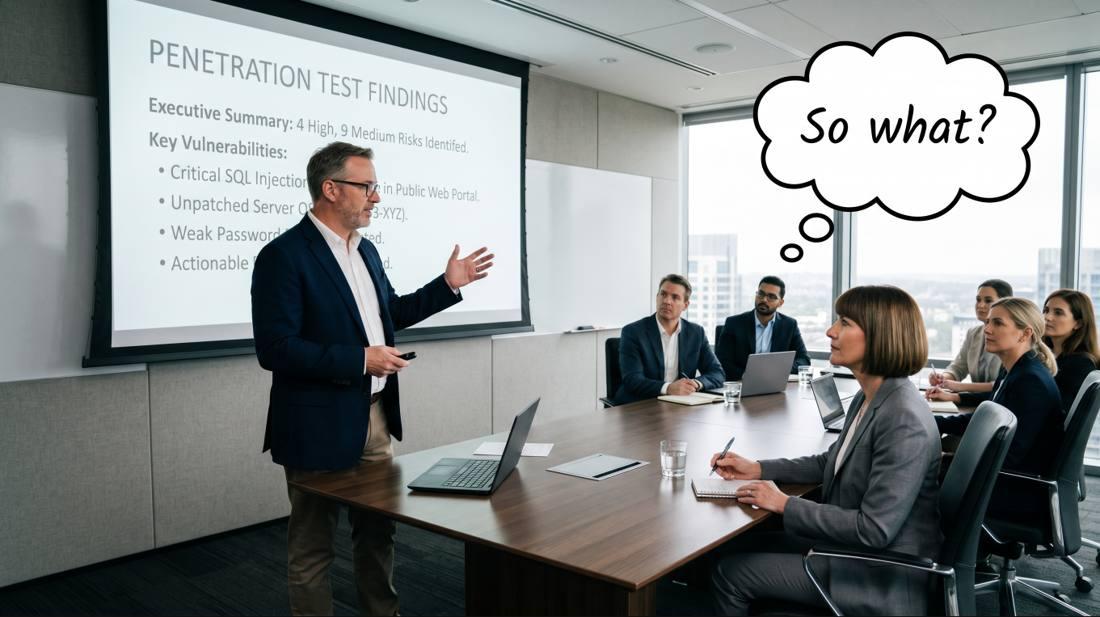
Tabletop Exercises That Change Something: Designing Scenarios Leadership Will Remember
Most tabletop exercises end with a sign-in sheet and no decisions. A well-designed exercise surfaces the gaps in authority, communication and vendor dependency that real incidents expose, and leaves a list of owned actions behind.
vCISO vs. Full-Time CISO: A Decision Framework for Mid-Market Organizations
The decision between a fractional virtual CISO and a full-time hire is not primarily a cost question - it is a security maturity and organizational readiness question. This framework helps you evaluate which model fits your current stage.
CrowdStrike Outage: What Security Teams Must Learn Before the Next Vendor Failure
The July 2024 CrowdStrike Falcon outage took down 8.5 million Windows systems in hours. Here is what the incident reveals about vendor risk, endpoint single points of failure, and the resilience gaps most organizations still have not addressed.